

India Cut Its Para Contingent by 45%. It Is Still Expecting Ninety Medals
The Asian Para Games open tomorrow. India sent 303 athletes to Hangzhou and won 111 medals. This time it is sending 168 — and spending 37 paise in the rupee, per head, of what the able-bodied team got.
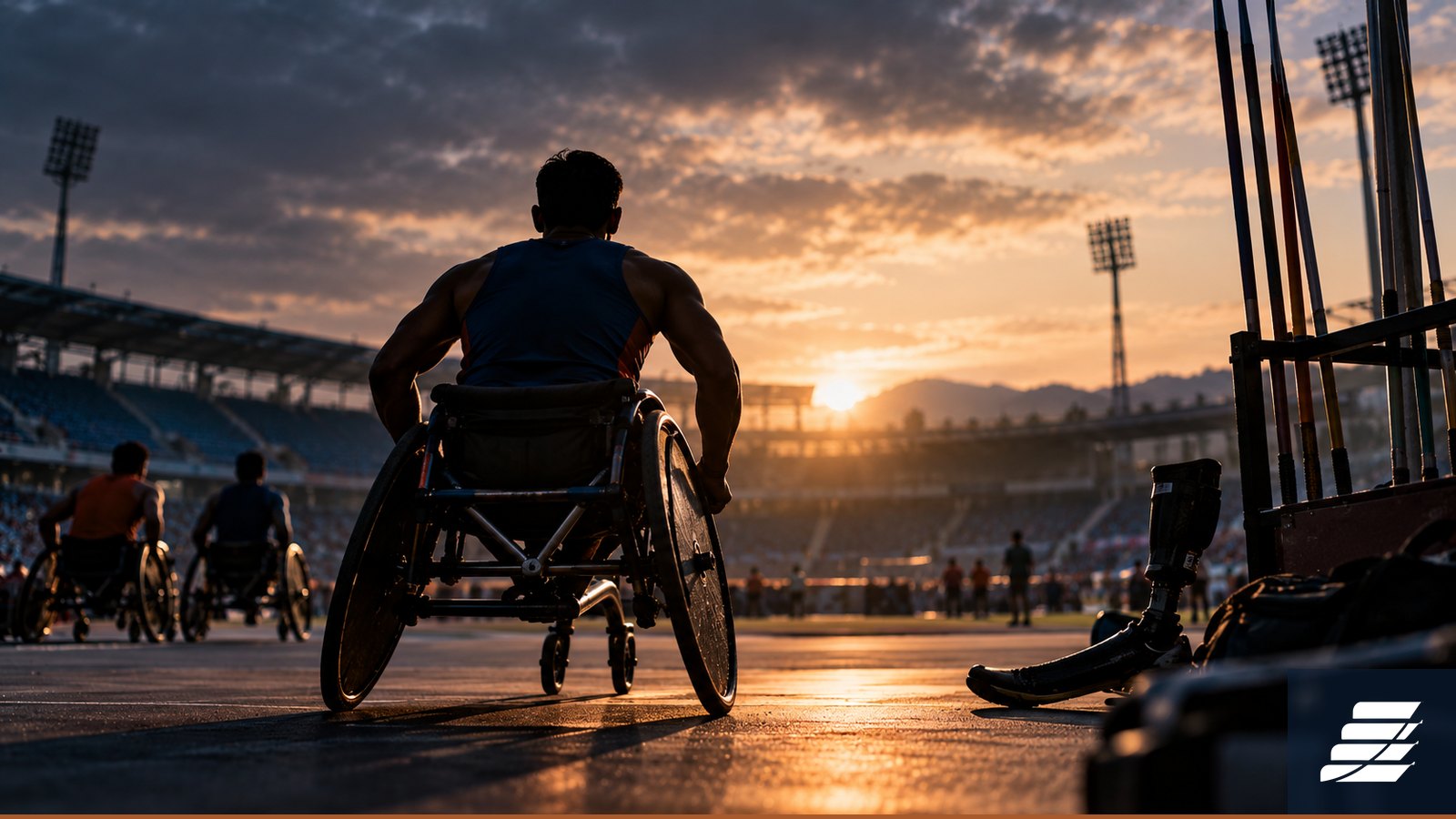
India is sending 168 athletes to the Asian Para Games, which open tomorrow. It sent 303 to the last edition and won 111 medals, its best ever.
The cut is not a funding decision. It is an entry quota set by the Asian Paralympic Committee, and three sports India medalled in have been dropped from the programme.
India pays a para gold medallist exactly what it pays an Asian Games gold medallist. It spends 37 paise in the rupee, per head, getting them there.
Why it shrank, and it is not what people assume
This is not a funding cut and it is not a tightening of Indian selection standards. It is a quota.
Rahul Swami, the Paralympic Committee of India's chief executive and the contingent's Chef de Mission, said so plainly on 12 October: "The Asian Paralympic Committee has introduced quotas in para-sports."
On athletics, the sport that produced 53 of India's 111 medals last time, he added: "we were initially allocated only 60 slots. After several emails and sustained efforts, we managed to secure two additional places."
So India takes 62 athletes in para athletics to a Games where it took 123. That one discipline is almost half the entire reduction.
A second cause has had almost no attention. Three sports in which India won medals in 2023 are off the 2026 programme — blind chess, para-rowing and para-canoeing. They delivered 13 medals at Hangzhou, including three golds. Those cannot be defended because the events no longer exist.
Five disciplines carry 130 of the 168 places: athletics (62), badminton (28), swimming (16), shooting (13) and archery (11).
Fifteen years of trajectory, in one table
| Games | Athletes sent | Medals | Position |
|---|---|---|---|
| 2010 Guangzhou | 102 | 14 | 15th |
| 2014 Incheon | 87 | 33 | 15th |
| 2018 Jakarta | 190 | 72 | 9th |
| 2022 Hangzhou | 303 | 111 | 5th |
| 2026 Aichi-Nagoya | 168 | starts tomorrow | — |
Rahul Swami expects somewhere between ninety and a hundred medals. He has not promised 111, and he is right not to.
The money, and the comparison that works
The Sports Authority of India disclosed the spend behind this contingent on 16 October: USD 11.2 million (INR 98.56 crore).
Be careful with the obvious framing, because it is unavailable. No figure has ever been published for what India spent preparing the Hangzhou para contingent. Anyone telling you the investment has gone up is guessing. We cannot make that comparison and nor can anyone else.
What we can compare is para against able-bodied, in the same cycle, from published numbers.
That gap sits awkwardly beside something India genuinely gets right.
So the reward is equal. The preparation is not.
Who is going, and they are formidable
This is not a weakened squad. It is a smaller one, and in the events India has concentrated on it may be the strongest group the country has sent.
Sumit Antil defends his javelin title in the F64 class as a double Paralympic champion, three-time world champion, and holder of a world record he reset at 74.82m in Bengaluru in May. Avani Lekhara won the 10m air rifle standing SH1 title at both Tokyo and Paris. Sheetal Devi, who shoots compound with her feet, is the reigning world individual champion and World Archery's 2025 Para Archer of the Year.
Behind them, five more Paralympic champions: Nitesh Kumar, Harvinder Singh, Praveen Kumar, Navdeep Singh and Dharambir Nain. Plus world champions Nishad Kumar and Simran Sharma, and Kapil Parmar, India's first Paralympic judo medallist. Pramod Bhagat and Bhavina Patel carry the flag.
Several of India's best are not on the list. We cannot find Yogesh Kathuniya, Sharad Kumar, Mariyappan Thangavelu, Sundar Singh Gurjar or Rakesh Kumar — Sheetal Devi's mixed-team world-record partner, which leaves her without him. These are absences from a published list, not reported exclusions, and each would need checking before anyone calls them dropped.
The part nobody is putting in the preview
A 45% cut has a cost. It has been playing out in the Delhi High Court and on a pavement outside the Jawaharlal Nehru Stadium.
Five para-cyclists were recommended by their federation and the PCI in July. The government's sanction order of 1 October cleared one. The five went to court asking to compete at their own expense, using quota places that were going unused.
On 15 October Justice Amit Mahajan dismissed the petition, and his reasoning will matter for years: vacant quota slots "only set a maximum number of entries and confer no right to participate." A Ministry circular permits only athletes cleared at government expense to join a contingent — so self-funding is unavailable even when a place is empty.
They had sat outside the stadium for four days before the hearing. Vishva Vasani's Asian Championships silver was discounted because only two riders contested her category: "It's not my fault that there were two people in my category." Lisha Das is sixteen.
Separately, around ten para shooters alleged to the Sports Authority of India that they were asked to surrender 20% of their government cash awards as a condition of selection. PCI president Devendra Jhajharia denies it: "The selection has been done as per the criteria." No inquiry has been announced. We flagged this as unproven in Issue 02; it remains unproven.
Who gains
- India's elite para athletes. A concentrated squad means more funding and support per head — athletics alone travels with 36 officials.
- Para athletics and badminton. Ninety of 168 places, and the disciplines that produced most of Hangzhou's medals.
- The Asian Paralympic Committee. Quotas make the Games more competitive and less a function of who can afford to send everyone.
- The cash-award case. India's parity order is good policy and more countries should copy it.
Who is exposed
- The 135 athletes not going. Including five cyclists who offered to pay their own way and were refused on a clause, not a result.
- Para cycling, rowing, canoeing and blind chess. Four medal-producing programmes with no Asian Para Games pathway in 2026.
- Women's para sport. Representation down from 37% to 33%, with two women in a sixteen-strong swimming squad.
- PCI's credibility. An unresolved kickback allegation, a lost court case and a four-day protest, all in the fortnight before the Games.
The quota is the Asian Paralympic Committee's decision and India had to live with it. Blaming the Indian system for the size of the contingent would be wrong.
What India chose was how to allocate the places it got, and what to do about the athletes who lost out. On the first, concentrating on athletics, badminton and shooting is defensible. On the second it is not. The government has a clause forbidding an athlete from representing India at their own expense even when the quota place is empty and their federation nominated them. That clause has no athlete-welfare justification. It exists for administrative tidiness.
Our position: amend it, and publish the 37% per-head spending gap with an explanation, rather than leaving a newsletter to calculate it.
The question for Indian sport
If India wins ninety medals from 168 athletes this week, it will have improved its medals-per-athlete rate by roughly 50% over the best Games it has ever had.
By any performance measure that is a better campaign than Hangzhou. It will be reported as a decline.
The same thing just happened to the able-bodied team. India spent USD 91 million (INR 800.70 crore) and won 85 medals in Aichi, down from 106, and the coverage was about the fall — not about the fact that nobody publishes a cost per medal, a per-sport split, or a target any of it could be judged against.
Para sport is where this matters most, because it is where Indian public money produces its highest return. World champions and world-record holders in javelin, high jump, shooting, archery and sprinting, built almost entirely on central funding, with no league, no broadcaster and no sponsorship market behind them.
And it receives thirty-seven paise of every rupee per head that the able-bodied contingent gets.
India has decided that a para gold and an Olympic-cycle gold are worth exactly the same cheque when the athlete comes home. When will it decide they are worth the same on the way out?
India's medals-per-athlete rate, not its medal total. Hangzhou produced 111 medals from 303 athletes, a rate of 0.37. Anything above 62 medals from 168 athletes beats that rate; above 90 would be a step change. We will publish both numbers when the Games close on 24 October. Separately: whether the Sports Authority of India opens any inquiry into the 20% cash-award allegation now that the team has travelled.