

94% of English Clubs Lose Money. Their Regulator Can Tell You to the Pound. Nobody Can Tell You What the ISL Lost.
England's new football regulator has published the most complete financial audit of a national football system ever attempted. India has eleven tiers of football, two working promotion boundaries, and a federation whose latest audit has no accounts attached to it.
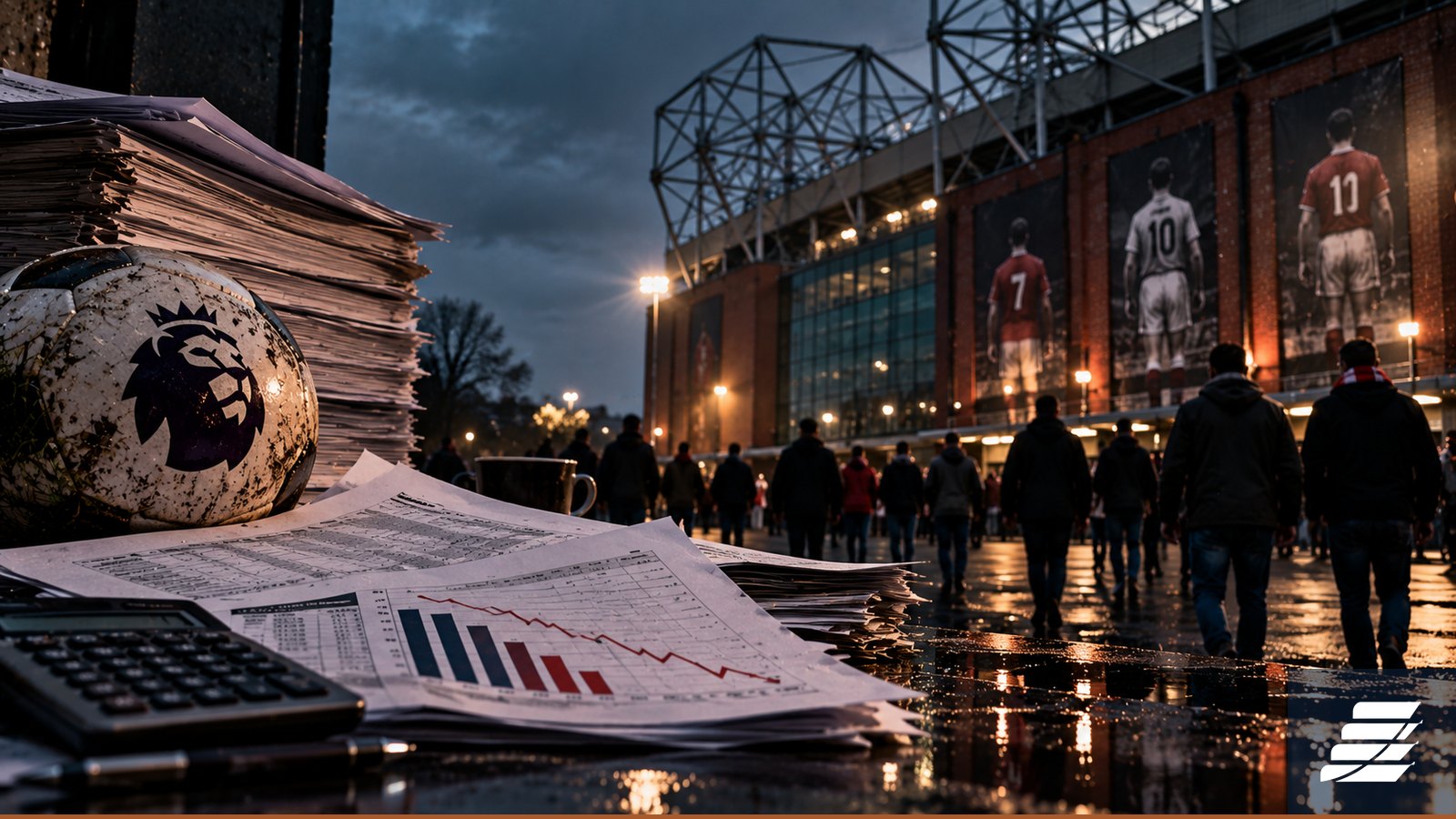
England's new football regulator has just published a 244-page audit of its own game. 109 of 116 clubs lost money last season.
It can tell you which clubs have less than 30 days of cash, how many times each owner had to top them up, and exactly how wide the gap between divisions has become.
India cannot produce a single aggregate loss figure for its top division, in twelve years of trying.
What makes it a serious document
Averages first. Pre-tax loss per club last season: Premier League GBP 44 million, Championship GBP 22 million, League One GBP 7.5 million, League Two GBP 2.7 million. Five years ago those figures were GBP 20 million, GBP 11 million, GBP 2.4 million and GBP 0.6 million.
Losses have roughly doubled, or worse, in every single division.
Wages explain it. As a share of revenue, the long-run averages have moved from 48% to 71% in the Premier League, from 68% to 101% in the Championship, and from 64% to 102% in League One. Two full divisions now spend, on average, more than everything they earn on player wages.
Then the regulator does something nobody else does. It measures how long each club would last if its owner walked away. Two-thirds could not see out 90 days. Thirty-two clubs have less than a month of cash. Sixty-seven clubs needed six or more separate owner top-ups in a single year; twenty-eight needed twelve or more.
David Kogan, the regulator's chair, put it without decoration: "if the owner walks away or drops dead, they're insolvent and go bust."
The money pools at the top
That gap bends the division it lands in. Championship clubs without parachute payments spend 84% of revenue on wages. Clubs with them spend 57%. Same league, completely different economics — and the entire parachute bill is only 5.7% of Premier League revenue.
The long arc is starker. In 1992-93 the highest-earning top-flight club earned 70 times the lowest-earning EFL club. By 2024-25 it earned 173 times.
Now look at ours
India has a multi-tiered football structure too. On paper it has eleven tiers, which is more than England.
Two boundaries decide whether that picture is a pyramid or a drawing of one.
The top one was settled by an unpaid invoice. Diamond Harbour FC won the Indian Football League last season — a genuine third successive promotion. The ISL participation fee was USD 125,000 (INR 1.1 crore) in two instalments. It paid the first by offsetting prize money the league already owed it, and could not pay the second. The deadline passed on 19 August. The AIFF ran a thirteen-club season and declined to name a replacement, although two clubs asked.
Diamond Harbour now sits bottom of the table on zero points, having never played a match, and drops back down next season.
Read that again. The relegation place is already occupied by a club that is not playing. So none of the thirteen clubs actually competing can go down on merit. And the thirteenth club, Churchill Brothers, is in the division because it took over another club's licence, not because it won anything.
The fourth-tier boundary is not a boundary at all. I-League 3 had twenty entrants last season. One arrived by relegation from above. Eighteen arrived by nomination from their state association. Not one arrived by winning a league below.
The AIFF's own page describes the division as contested by clubs "nominated by member associations based on their performances in the state leagues." Note the wording: performances, not results. The nominated clubs included sides that finished third in Delhi, second in Madhya Pradesh and third in Goa. Nomination does not even require winning your state league.
And the figure nobody can produce
England's regulator can tell you that its game lost GBP 1.7 billion last season, which clubs have 30 days of cash, and how many owner injections each one needed.
Nobody can tell you what the Indian Super League lost.
No aggregate figure is published by anyone — not FSDL, not the AIFF, not the clubs. ISL clubs file privately with the Ministry of Corporate Affairs and no league-level consolidation exists. Per-club numbers circulate on social media; we will not print them, because we cannot stand behind them.
It is worse at the federation. The AIFF's most recent machine-readable accounts are for FY2022-23 — income of USD 15.7 million (INR 137.75 crore) against expenditure of INR 152.47 crore. The FY2023-24 filing is a scan with no text layer. The FY2024-25 document contains the auditor's report and no financial statements at all — and that report carries a qualified opinion.
India's football federation has no readable published revenue figure more recent than three and a half years ago. That is the baseline from which FIFA may hand it USD 25 million (INR 220 crore) next March.
What England proves is possible
- A regulator can get the data. It sent information requests to 112 of 116 clubs and published cash-cover days per club.
- Owner dependency is measurable. Counting top-ups and survival horizons turns a vague worry into 32 named-risk clubs.
- Distribution gaps can be quantified. Seventeen-to-one, parachute versus solidarity, 173x over thirty years — all published.
- It can be done to a deadline. 244 pages, consultation open, final due early 2027.
What India cannot answer
- What the ISL lost last season. No aggregate figure exists anywhere.
- How many Indian clubs would survive their owner leaving. Nobody has asked, so nobody knows.
- How many clubs are in Indian football. Mumbai's own association says “100+” in one place and “over 300” in another.
- What the AIFF earned last year. The audit is published; the statements are not.
The temptation is to read England's report as a warning and India's silence as a blessing. That is exactly the wrong conclusion. English football is in trouble and England knows precisely how much trouble, which is why it can now act. Indian football may be in less trouble or far more. Nobody can say.
The pyramid is the second lesson. England's problem is that too much money pools at the top of a structure that otherwise works — clubs rise and fall on results, and the complaint is about the size of the cliff. India's problem is different. Our cliff is a wall. Promotion to the top tier requires a cheque. Entry to the fourth tier requires a nomination.
Our position: before Indian football asks for more money, it should publish two numbers — aggregate ISL club losses, and AIFF's audited revenue for the last two completed years. Neither requires legislation. Both require a decision.
The question for Indian football
I have spent this week reading a document in which English football tells on itself in public.
It is not a comfortable read. Ninety-four per cent of clubs losing money. Two divisions spending more on wages than they earn. Thirty-two clubs a fortnight from insolvency.
And I came away faintly envious, which surprised me.
Because every one of those sentences is a fact somebody now has to answer for. The argument will be hard, but it is an argument about numbers everyone agrees on.
India cannot have that argument. We do not have the numbers. We have a top division whose relegation place is filled by a club that never kicked a ball, a fourth tier you enter by being chosen, and a league whose aggregate losses have never been published in twelve years.
What we do have, in abundance, is ambition. A 2036 Olympic bid. A 2030 Commonwealth Games. A USD 839 million (INR 7,387 crore) funding scheme that opened for business on Friday. FIFA possibly arriving with USD 25 million (INR 220 crore) in March.
Here is the thing about a pyramid. You cannot build one from the top.
England's trouble is that its pyramid has grown too steep in the middle. Ours is not steep. Ours is not connected. A club in Mumbai's third division could win every match for five years and still have no sporting route to the Indian Super League.
So the question for everyone writing cheques into Indian football: what exactly are we funding?
If it is a professional top division, say so, close it properly, and stop pretending there is promotion. And if it is a pyramid, somebody has to answer why the only way into the fourth tier is to be chosen.
Whether the AIFF publishes financial statements alongside its next audit report, and explains the qualified FY2024-25 opinion. Whether it publishes the I-League 3 nomination criteria in readable form — the governing circular exists but is an image-only scan, so the rule determining entry to Indian national football cannot currently be read by the public. And 8 December 2026, when consultation closes on the English report: the final version will say whether 94% survives contact with audited accounts.