

HIL — Two Golds on Friday, a Rescue Committee on Wednesday
India's hockey teams won the Asian Games. Four days later the Sports Ministry convened a panel to work out whether their league has a financial model.
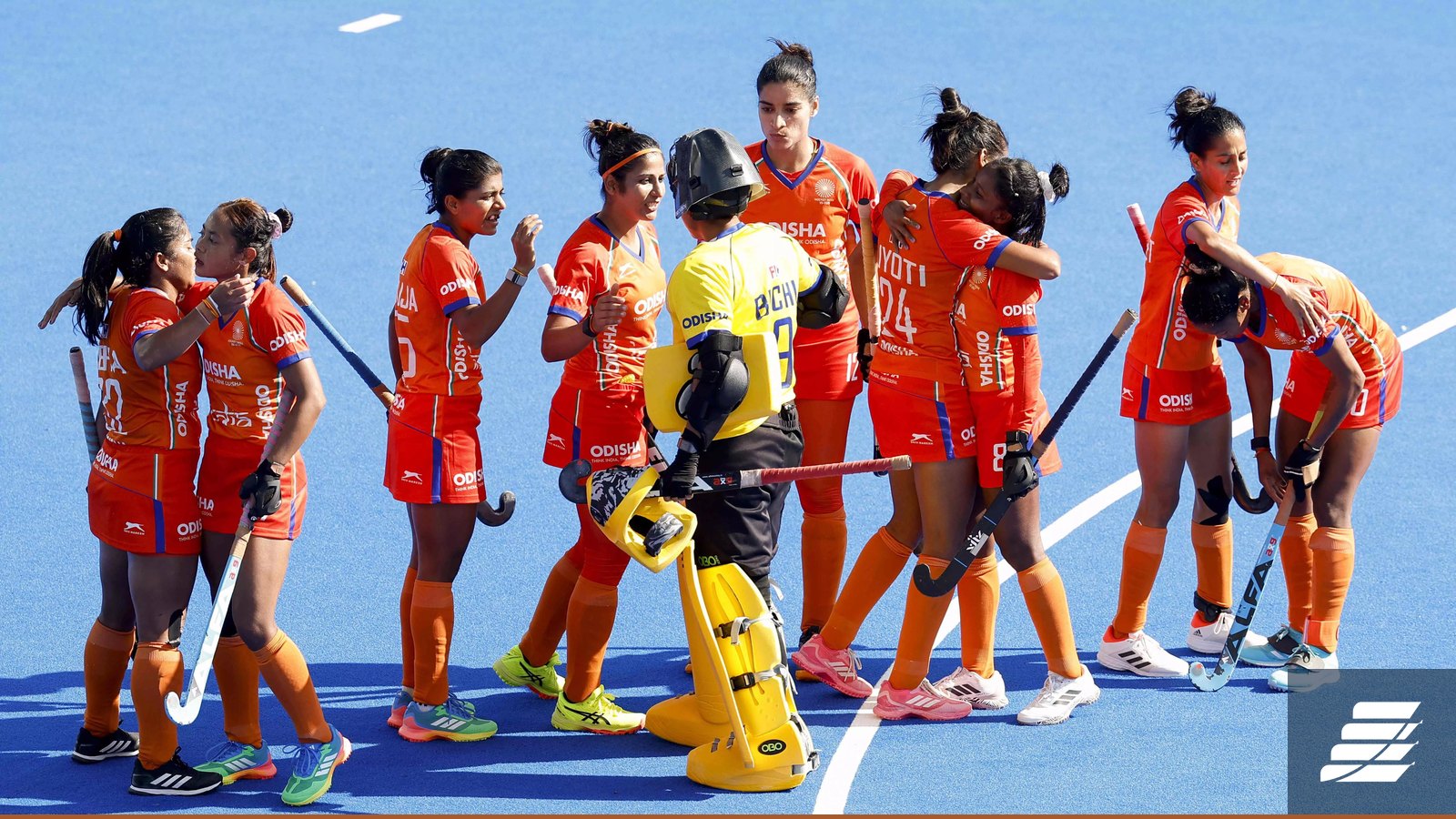
On 2 October India's women beat China 1-0 to win Asian Games gold for the first time in 44 years, and qualified for Los Angeles. On 3 October the men beat Malaysia 5-1 to retain theirs and qualify too.
On 7 October the Union Sports Ministry constituted a seven-member committee to redesign the Hockey India League's governance model, financial model and structure.
What the relaunch cost
The original Hockey India League ran from 2013 to 2017 and closed. It came back in December 2024 after a seven-year gap, with eight men's teams and four women's.
The entry price, reported by The Tribune in March 2025: USD 800,000 (INR 7 crore) for a men's franchise, USD 284,000 (INR 2.5 crore) for a women's.
The season-one numbers from the same report:
- Hockey India projected USD 10.2 million (INR 90 crore) in sponsorship. It collected USD 1.5 million (INR 13 crore). An 86% shortfall.
- Owners running both a men's and a women's team lost about USD 1.5 million each — roughly what they paid to enter.
- Running both teams cost upwards of USD 2.3 million (INR 20 crore).
- Owners asked to see the season's profit and loss account. They were shown it but not given it.
Hockey India distributed 60% of the USD 1.5 million among the owners, added USD 114,000 to each men's owner and USD 57,000 to each women's, and promised to hire a commercial head.
Who left
Three franchises went inside a month in 2025.
| Franchise | Exit | Stated reason |
|---|---|---|
| Team Gonasika (men's) | 31 Aug 2025 | "Personal reasons" |
| Odisha Warriors (women's, reigning champions) | 31 Aug 2025 | "Personal reasons" in one account, financial constraints in another |
| UP Rudras (men's) | 21 Sept 2025, by email | "Financial sustainability challenges made continuation untenable" |
The Rudras email arrived two days before the mini-auction. The HIL Governing Council took over the squad and ran it as a team called "HIL Governing Council", captained by India's vice-captain Hardik Singh. It finished fourth of seven. No buyer has appeared.
On the women's side, a month after the inaugural season ended in January 2025, some players had reportedly received only 20% of what they were owed.
The appeal
In August 2026, days after India's women finished fifth at the World Cup — their best result since 1974 — the players went public.
On 25 August, a group including captain Salima Tete, Neha, Sakshi Rana and Navneet Kaur recorded an appeal from Amstelveen. Navneet Kaur:
"Our league does not require that much money. It is not about money; we need exposure."
Two days later Savita Punia posted a written appeal addressed to the Prime Minister, the sports ministers, Shah Rukh Khan, Priyanka Chopra, Ananya Birla and the Reliance Foundation.
"The math is simple: no league, no talent pool, no next generation, no World Cup medal."
No official communication has said the women's league is finished. At least two women's franchises have pulled back.
The committee
Seven members. Vineel Krishna, Joint Secretary for Khelo India, from the ministry. Hockey India's president Dilip Tirkey, secretary general Bhola Nath Singh and treasurer Sekar J Manoharan. And three franchise owners: Alok Sanghi of Resolute Sports, Mahesh Bhupathi of SG Sports, Divyanshu Singh of JSW Sports.
No convener is named. No deadline is published beyond "time-bound". A September meeting had planned a five-member panel. By October it was seven, with Hockey India and the franchises each gaining a seat. No reason has been given.
The three franchise owners on the committee are the ones who stayed. Those who quit are not in the room.
Why a ministry is involved
A sports ministry does not normally convene a private league's owners and tell them to redesign its commercial model. Nobody did this for the ISL while its rights value fell 97%. Nobody is doing it for the PKL.
The difference is structural. The PKL is operated by a private company. The HIL is operated by Hockey India's own Governing Council. The league's governing body is the national federation.
Under the National Sports Governance Act 2025, the National Sports Board grants, renews, suspends and cancels federation recognition. Only recognised bodies receive central funding. Only authorised bodies may field teams representing India.
So the ministry's leverage runs through Hockey India, not the franchises. This is our reading rather than a reported fact. None of the coverage of the committee mentions the Act, and it is not established that the Act reaches franchise leagues at all.
Meanwhile, in Chhattisgarh
On the same day, the Chhattisgarh government handed Sspark Sports the operator mandate for India's first franchise-based state hockey league. Six regional teams, 21 October to 1 November, at the SVP International Hockey Stadium in Raipur, sanctioned by Hockey India.
No budget, franchise fee, prize money or broadcast arrangement has been published. The state ran the trials and submits a selection list to the Directorate of Sports, from which the six squads are formed. 373 players registered; 223 turned up on the opening day. The franchises are not building squads.
The question for Indian sport
Take the sequence on its own. Both national teams win Asian Games gold and Olympic places. Four days later a cabinet minister has to assemble seven people to establish whether the domestic league can survive.
The federation holding three of those seven seats is the one that projected USD 10.2 million of sponsorship, collected USD 1.5 million, declined to hand over the accounts, and ended up fielding one of the teams itself. It is now being asked to fix the thing it built.
Savita Punia said it more plainly than any of this: no league, no talent pool, no next generation, no World Cup medal. She said it after the best women's hockey result in half a century, which tells you she was not asking for a reward. She was pointing at the gap between what India's hockey players are achieving and what is being built underneath them.
And one state has stood up a hockey league in eight weeks with civil servants running the draft, while the national one needs a ministerial committee.
If the federation owns the league, runs the league and plays in the league, who is the franchise owner buying from?